India AI Impact Summit 2026 - Representing the Frontier of Innovation
The India AI Impact Summit 2026, held at Bharat Mandapam in New Delhi, was a watershed moment for India's artificial intelligence ecosystem. Backed by leading technology organizations, government support for AI initiatives, and unprecedented investment in computational infrastructure, the summit marked a pivotal shift in how India is positioned in the global AI landscape. It wasn't just another conference—it was a declaration that India is transitioning from being an AI consumer to becoming an AI creator and innovator on the world stage.
Taking a moment to process the whirlwind that was being part of this historic event. Representing Dayananda Sagar University—and anchoring the largest stall in Hall 6—on such a massive platform was a profoundly surreal and humbling experience. The summit brought together not just researchers and students, but venture capitalists, corporate innovators, policy makers, and visionaries who are shaping India's AI future.
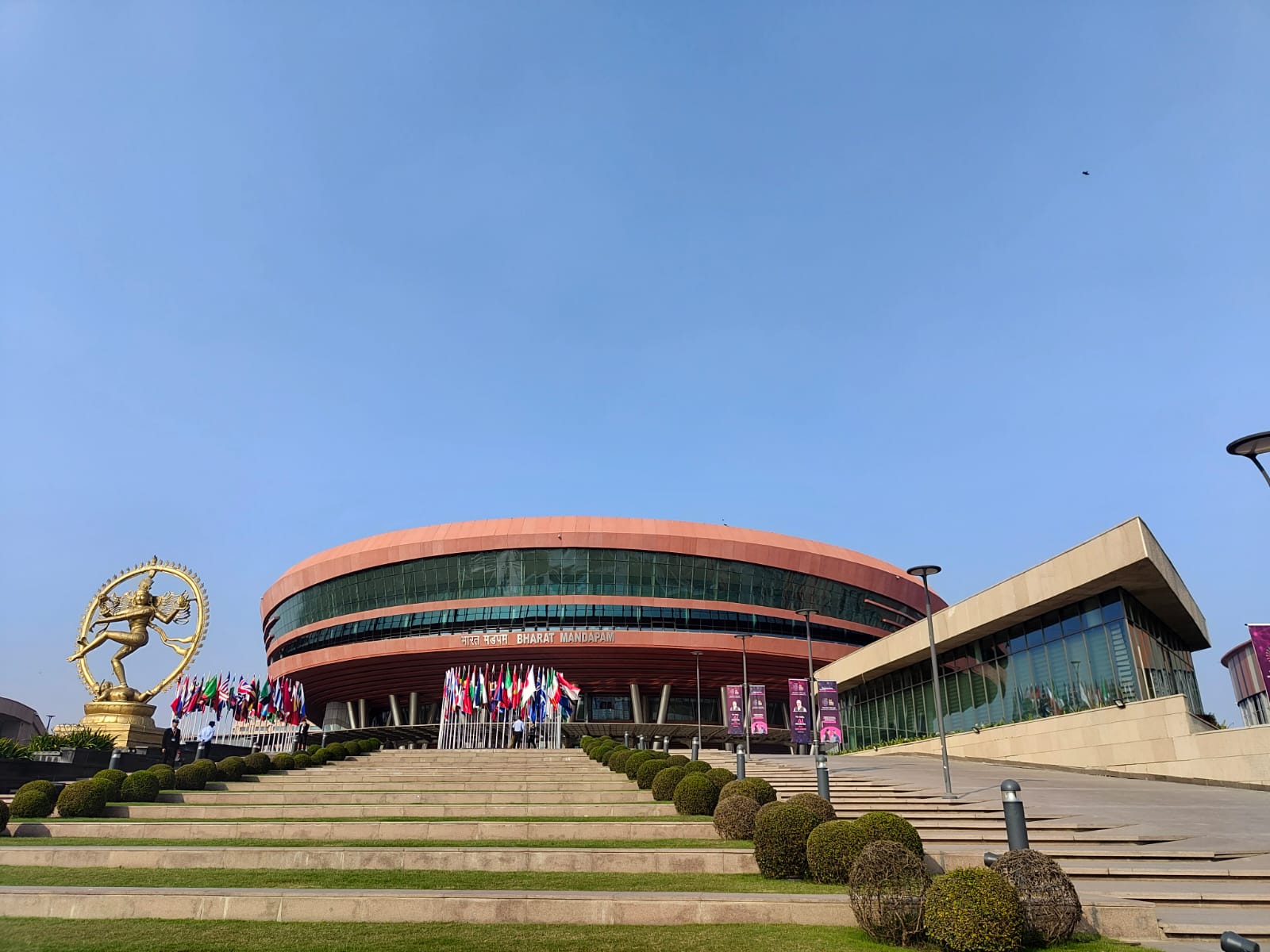
Bharat Mandapam, New Delhi - The epicenter of India's AI ecosystem gathering in February 2026
Understanding the Summit's Significance
The India AI Impact Summit 2026 represented a confluence of factors that make this moment unique. For the first time, India has the computational infrastructure, research depth, and entrepreneurial momentum to make globally competitive strides in AI. The summit showcased not just academic research but also practical applications—AI being deployed in healthcare, agriculture, financial services, and governance across the country.
What made this particular summit noteworthy was the emphasis on responsible, inclusive AI development. There's recognition across academia and industry that India's diverse population, multiple languages, and unique challenges present both opportunities and responsibilities for developing AI that serves billions, not just a privileged few.
Summit Scale & Impact at a Glance:
The NVIDIA Stall & Edge AI Demonstrations
While the Blackwell clusters represent the absolute frontier of compute power, my focus at our sprawling stall was exploring the opposite end of the spectrum: doing more with less. This philosophy—that we don't always need massive data centers to deploy powerful AI—is fundamentally important for a country like India with diverse connectivity, geography, and resource constraints.
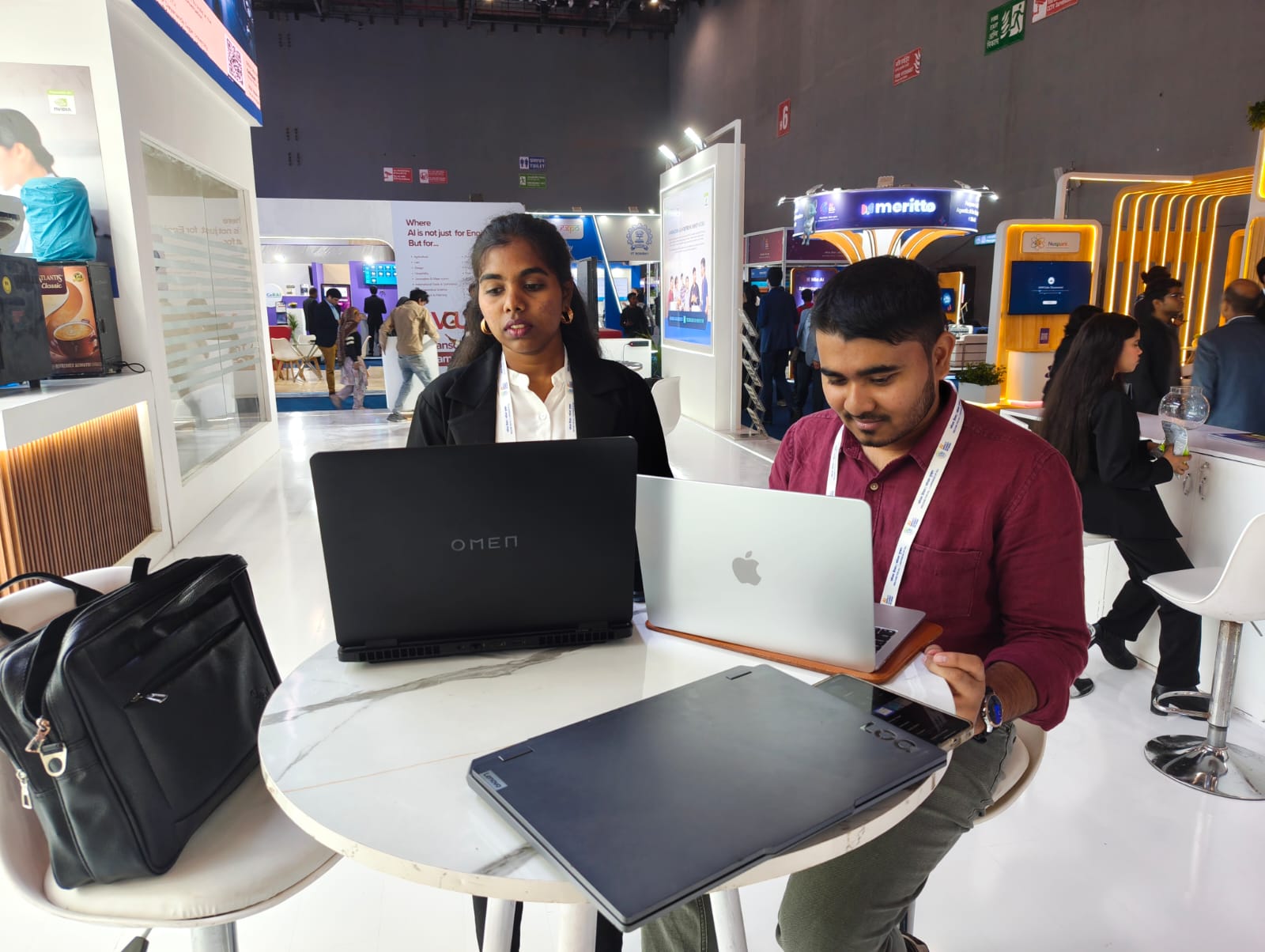
Our stall became a hub for hands-on edge AI demonstrations. Visitors could interact with custom, scratch-trained large language models running entirely on NVIDIA Jetson Nano 4GB boards—devices costing less than 10,000 rupees. We showed live inference, latency metrics, and power consumption data. The reaction was profound: industry leaders, academics, and fellow students alike were seeing concrete proof that meaningful AI doesn't require a cloud infrastructure budget.
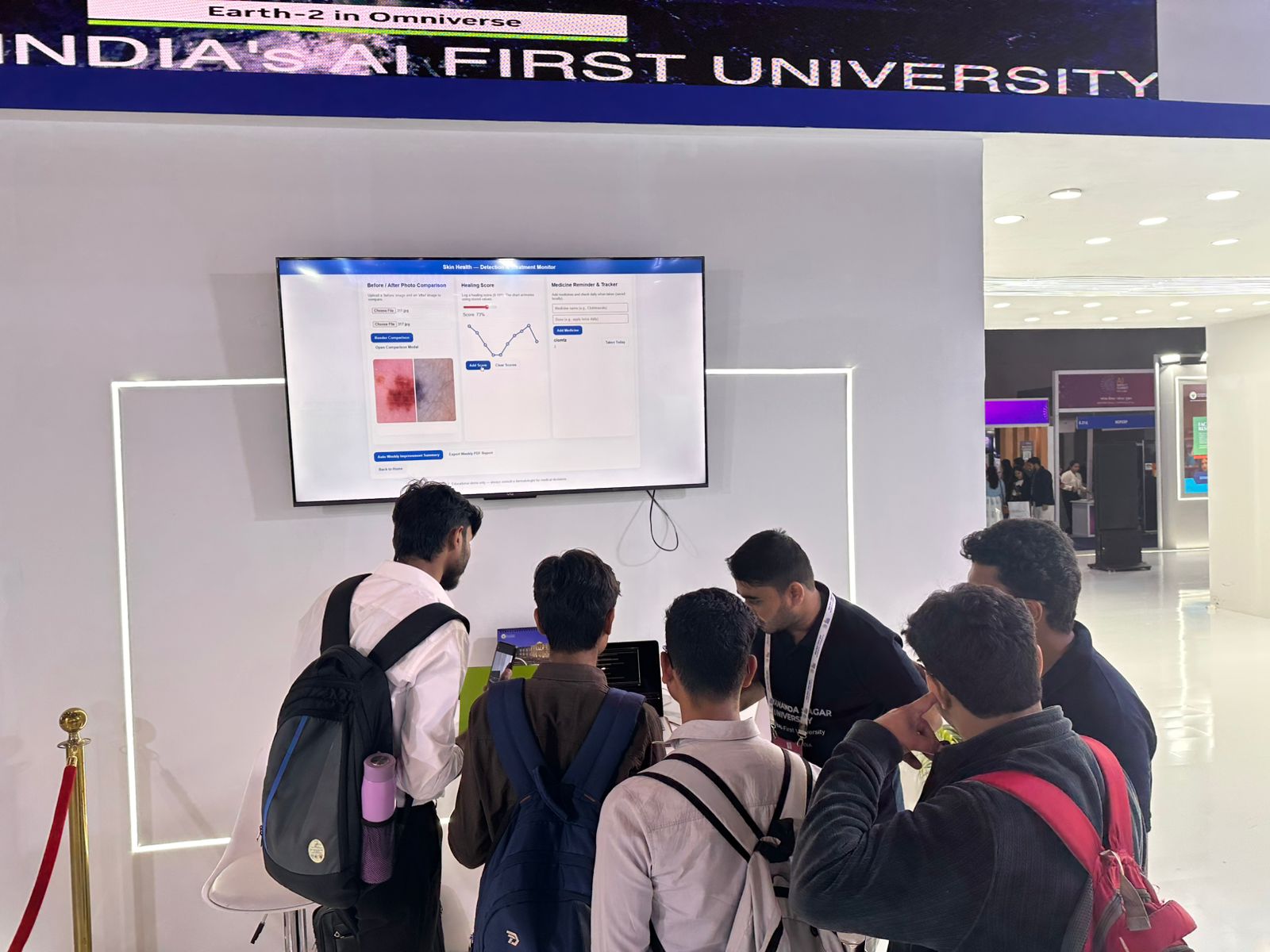
Demonstrating custom LLMs running on resource-constrained NVIDIA Jetson hardware at the DSU stall
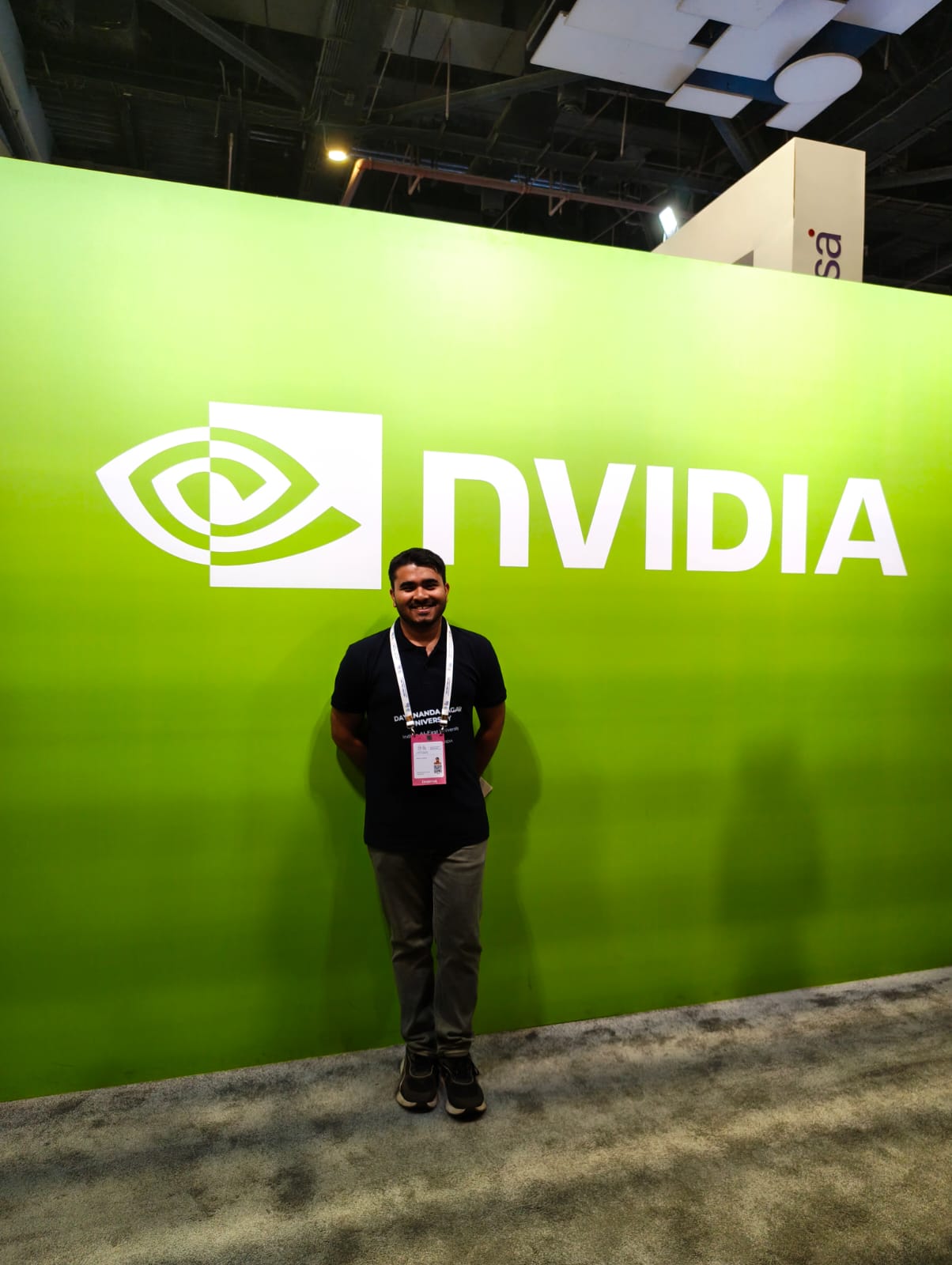
NVIDIA at AI Impact Summit 2026
Extreme Efficiency at the Edge - The Research Vision
The core insight driving our research: as AI models grow more sophisticated, the traditional approach of centralizing all computation in cloud data centers becomes unsustainable and inequitable. Edge AI—running capable models directly on user devices—addresses multiple challenges simultaneously: latency reduction, privacy preservation, bandwidth savings, and most importantly, democratization.
In rural India, connectivity is spotty at best. In hospitals, sending patient data to cloud servers raises privacy concerns. In manufacturing, real-time inference at the machine level is critical. Edge AI becomes not a luxury but a necessity. Our work on model compression—reducing a large language model from billions of parameters to millions while maintaining reasoning capability—directly addresses this reality.
Research Projects Showcased at the Summit
LLM Compression & Edge Optimization
Developing efficient transformer architectures that maintain reasoning capability on resource-constrained devices. Techniques include knowledge distillation, quantization, pruning, and architectural innovations. The goal: production-grade language models on sub-$100 hardware with latency under 500ms per token.
Medical AI & Healthcare Applications
Deploying deep learning for medical imaging and diagnostics. From chest X-ray analysis to pathology image classification. The critical advantage of edge deployment here: patient data never leaves the hospital, critical diagnoses don't depend on internet connectivity, and rural clinics can access diagnostic AI capabilities.
Autonomous Drones & Robotics
Building autonomous systems with on-device computer vision and real-time decision making. Applications range from agricultural monitoring to disaster response. Working with the Autonomous Intelligence & Robotics (AIR) Research Group to push the boundaries of what's possible with edge computation in robotics.
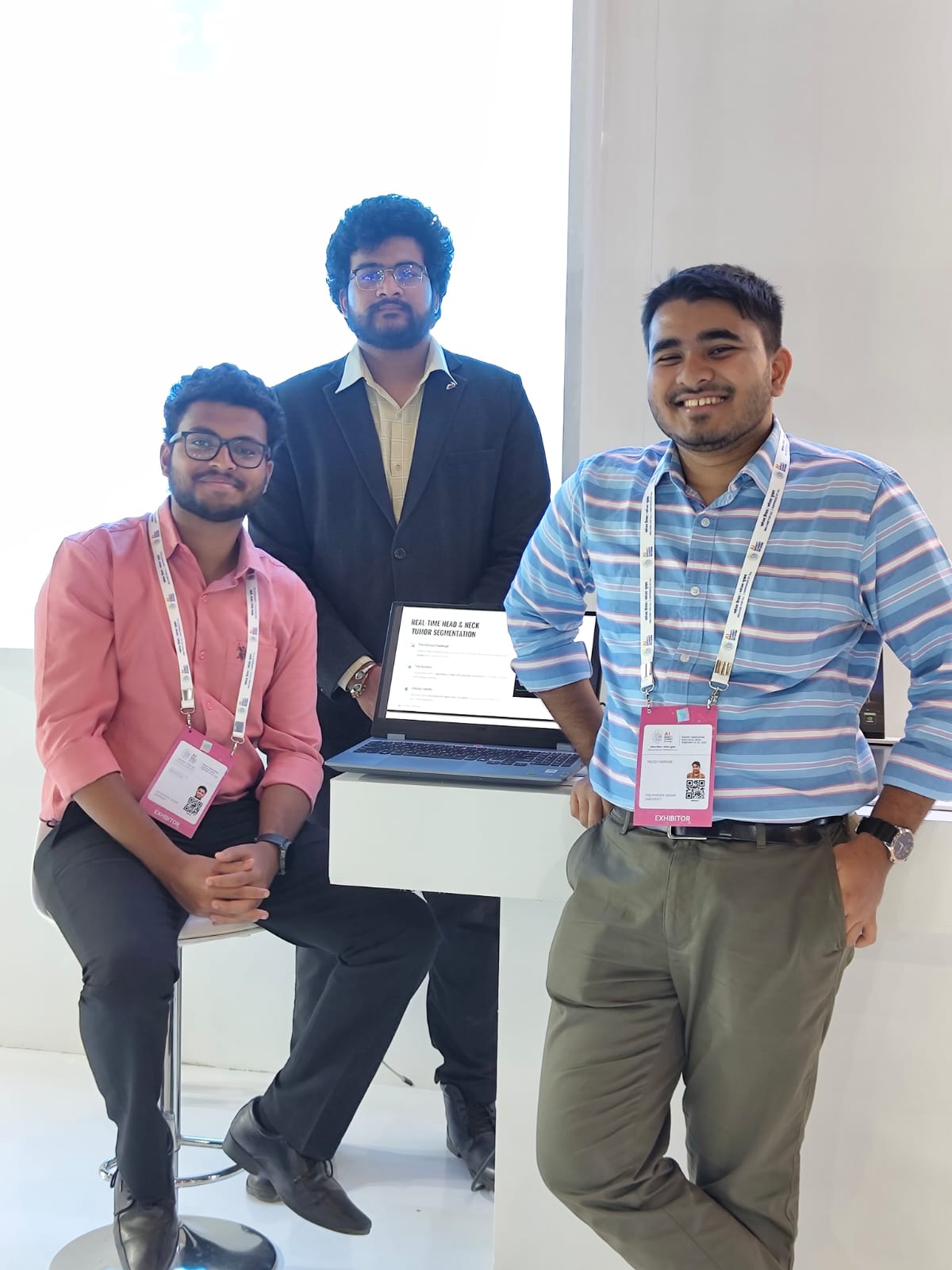
Live technical demonstrations showcasing edge AI inference and model compression techniques
The Technical Deep Dive - Why This Matters
What made our demonstrations resonate was the practical, hands-on approach. Rather than PowerPoint slides about theoretical benchmarks, we showed working systems processing natural language, answering questions, and generating responses—all on hardware that costs less than a month of cloud computing would.
Every conversation followed a similar pattern. Industry practitioners would ask: "How do we deploy AI when cloud connectivity is unreliable?" "What's the edge compute story for underserved regions?" "Can we really get production-grade results on constrained hardware?" Our demonstrations provided concrete answers backed by working code, measurable benchmarks, and real use cases.
The implications for India are profound. With digitalization reaching 600+ million people, but infrastructure still uneven, edge AI becomes not a niche optimization but fundamental infrastructure. It enables healthcare in rural areas, agriculture optimization for smallholder farmers, financial services for underbanked populations, and industrial AI without massive capex requirements.
DSU at the Summit - India's Largest Academic AI Innovation Stall
Dayananda Sagar University's presence at the summit was unprecedented for an Indian academic institution. The largest stall in Hall 6 wasn't just a booth—it was a manifestation of DSU's transformation into a research powerhouse. This wasn't about prestige; it reflected the depth and breadth of innovation happening on campus.
What made DSU's showcase particularly notable: we weren't presenting incremental improvements to existing work. We were showcasing fundamentally new research directions—from edge AI at one extreme to the latest advances in large language models at the other. We were demonstrating that an Indian university could compete on research depth with global institutions.
DSU's Commitment to AI Innovation
- Student-Led Research: The AIR (Autonomous Intelligent Research) Research Group, medical AI lab, and robotics team—all student-driven initiatives mentored by faculty researchers. This isn't about teaching AI; it's about advancing the frontiers of AI through student researchers.
- Innovation Pipeline: Emerging startups and deep tech ventures incubated within DSU's ecosystem. Several ventures in computer vision, NLP, and robotics are transitioning toward product and market.
- Academic Contributions: Curriculum development in LLM engineering, AI foundations, and edge computing—preparing students not just to consume AI but to shape its future.
- Cross-Disciplinary Integration: Remarkable convergence of computer vision, natural language processing, robotics research, and medical imaging under one institutional roof.
DSU's comprehensive showcase at the India AI Impact Summit—largest academic stall in Hall 6
The Broader AI India Ecosystem
Beyond DSU, the summit revealed the full spectrum of India's AI ecosystem. Established IT companies like Infosys, TCS, and Wipro showcased enterprise AI solutions. Deep tech startups demonstrated innovations in computer vision for retail, NLP for Indian languages, and AI for agricultural applications. Government initiatives highlighted India's focus on AI for governance, healthcare, and financial inclusion.
What was evident: India is no longer just implementing AI solutions from the West. Indian researchers, entrepreneurs, and institutions are fundamentally advancing the state of the art. From language models trained on Indian languages to AI optimized for high-latency, low-bandwidth environments, to applications addressing India-specific problems—the innovation is becoming increasingly indigenous.
The summit's theme—"From Impact to Implementation"—captured this perfectly. It's not about acknowledging AI's potential anymore. India is moving into the phase of actually deploying AI to solve real problems for real people at scale.
Insights From 250+ Conversations - What the Summit Revealed
Over three days, I engaged in detailed conversations with industry CTOs, research directors, entrepreneurs, and fellow academics. Each conversation revealed patterns about where AI is heading in India and globally. The cumulative insight from 250+ interactions was transformative—hearing so many diverse perspectives has completely refueled my drive and clarified the research path ahead.
Emerging Themes From the AI Ecosystem
1. Edge AI is No Longer Optional
Every infrastructure company, whether cloud provider or edge specialist, emphasized that the future isn't cloud-only or edge-only. It's cloud-edge-device continuum. The proliferation of IoT devices, real-time requirements, privacy regulations, and bandwidth constraints mean edge inference is becoming standard. Our work on efficient models directly addresses this reality.
2. India-Specific AI is Critical
There's unprecedented focus on developing AI solutions tailored to Indian contexts. Language models trained on Indian languages (Hindi, Tamil, Telugu, Kannada, etc.), AI for agricultural optimization with our monsoon patterns and crop diversity, healthcare AI that understands Indian epidemiology and healthcare infrastructure constraints. India can't simply adopt Western AI solutions—foundational research on India-specific applications is essential.
3. Talent Concentration & Diffusion
While AI talent in India remains concentrated in metro areas and top-tier institutions, the summit revealed serious efforts to diffuse expertise to tier-2 and tier-3 cities. Universities like DSU, emerging tech hubs in Pune, Chennai, and Bangalore suburbs, and remote-first companies are enabling talented individuals across India to work on frontier problems. This democratization of access to opportunity is crucial for India's AI competitiveness.
4. Responsible AI as Competitive Advantage
Fairness, transparency, and safety in AI are no longer afterthoughts but core research directions. Companies investing in responsible AI are gaining regulatory trust and customer confidence. India has an opportunity to lead on responsible AI, especially building systems that work for diverse populations and socioeconomic contexts.
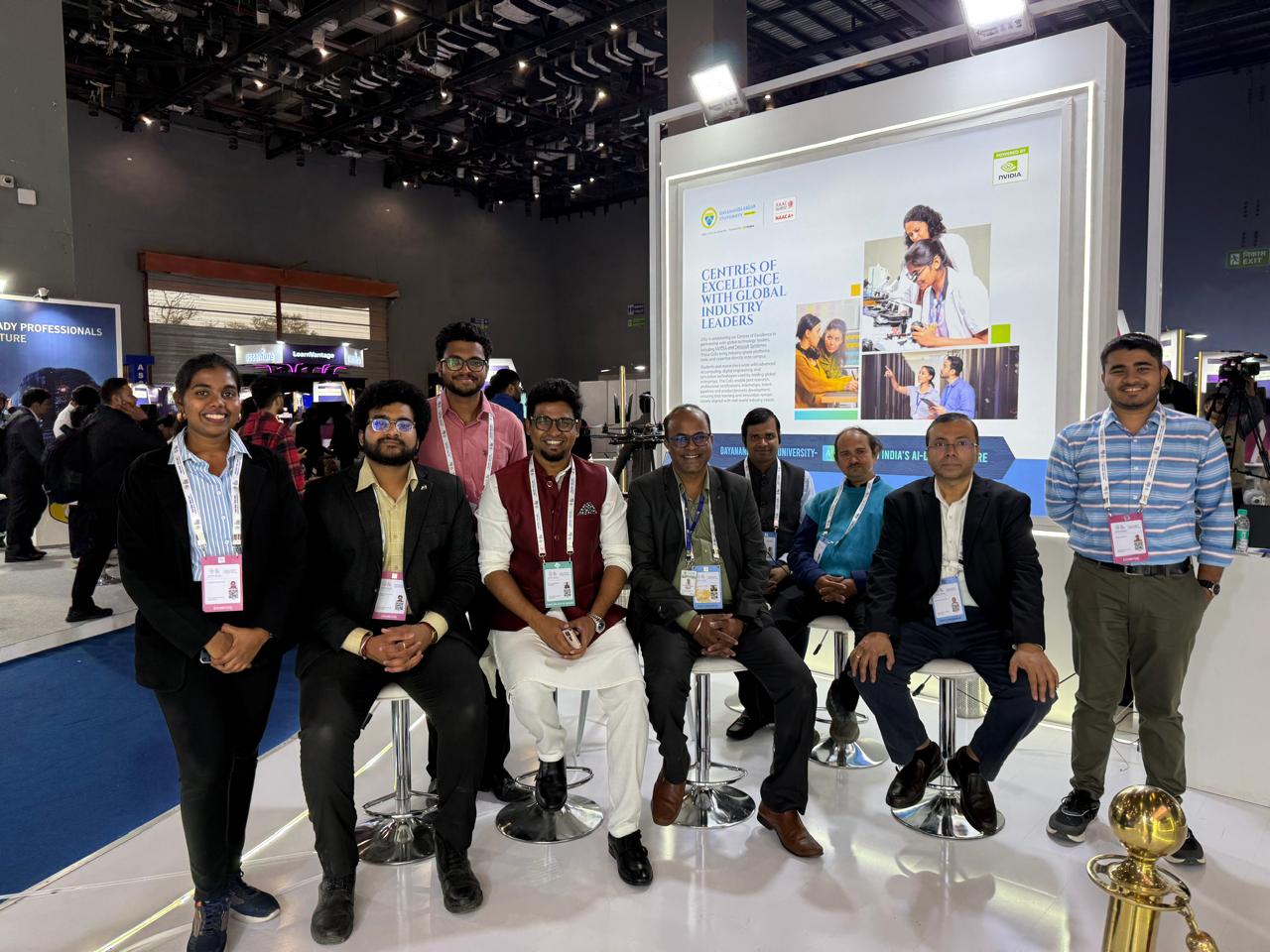
DSU students representing next generation AI innovators
Technical Insights From Leading Companies
Conversations with technical leaders at major companies yielded specific insights about what's working and what challenges remain:
- Model Scaling Challenges: As models grow larger, training costs scale dramatically. Optimization techniques—whether through efficient architectures, better training algorithms, or hardware co-design—become economic necessities, not just research problems.
- Latency & Throughput Trade-offs: Production systems often face hard constraints on latency while needing to maintain throughput. Edge deployment inherently favors smaller, faster models. This creates market opportunities for research on model compression and efficient inference.
- Data Quality is Paramount: Multiple companies emphasized that raw data volume matters far less than data quality. Synthetic data generation, smart data selection, and active learning are becoming core competencies.
- Integration Complexity: Moving from standalone models to integrated systems that work with legacy infrastructure remains a major challenge. Pragmatic solutions that work within existing tech stacks are valued as much as novel research.
Industry Connections & Technical Insights
The summit was a hub for building relationships that will define the next phase of AI research in India. We engaged in over 250 conversations with researchers, engineers, and industry leaders from premier institutions and companies.
Google's AI Research & India Strategy
Google's presence at the summit showcased their commitment to Indian AI innovation. Beyond cloud infrastructure, they're heavily invested in research on efficient models, multilingual NLP, and AI for social impact.
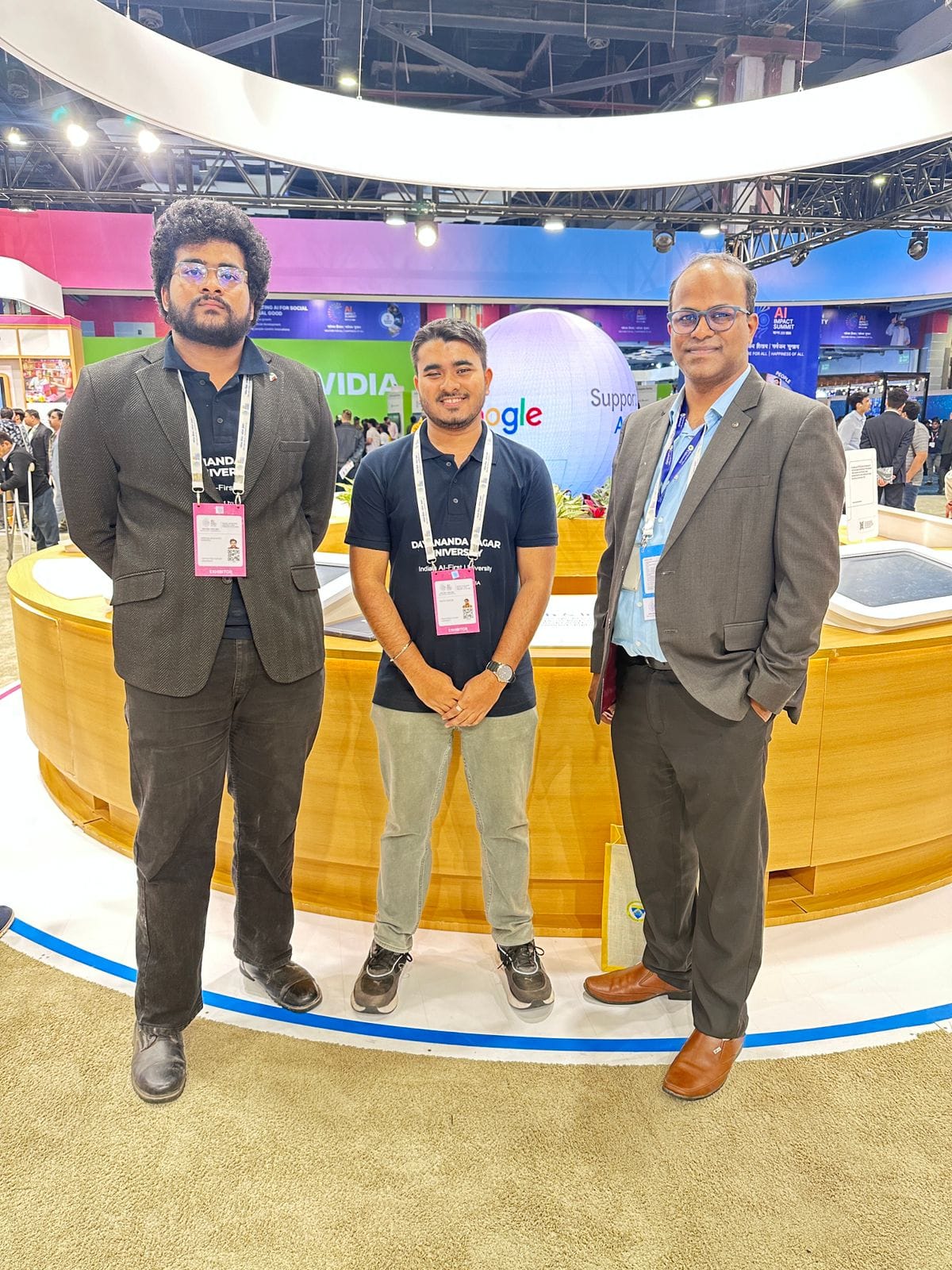
Google's advanced AI research and India-focused initiatives showcase
Discussions with Google researchers revealed their focus on:
- Efficient transformer architectures that work on mobile and edge devices
- Multilingual models that handle Indian languages with the same quality as English
- Privacy-preserving machine learning for healthcare and sensitive applications
- Engagement with Indian institutions for technology transfer and research
The convergence with our research is notable. They're investing in exactly the problems we're solving—efficient models, multilingual capabilities, edge deployment. This validates our research direction and creates natural engagement opportunities.
AWS Cloud Infrastructure & Enterprise AI Solutions
AWS's presence emphasized the enterprise perspective—taking AI models from research to production at scale. Their showcase highlighted the cloud-edge continuum that's becoming the standard architecture.
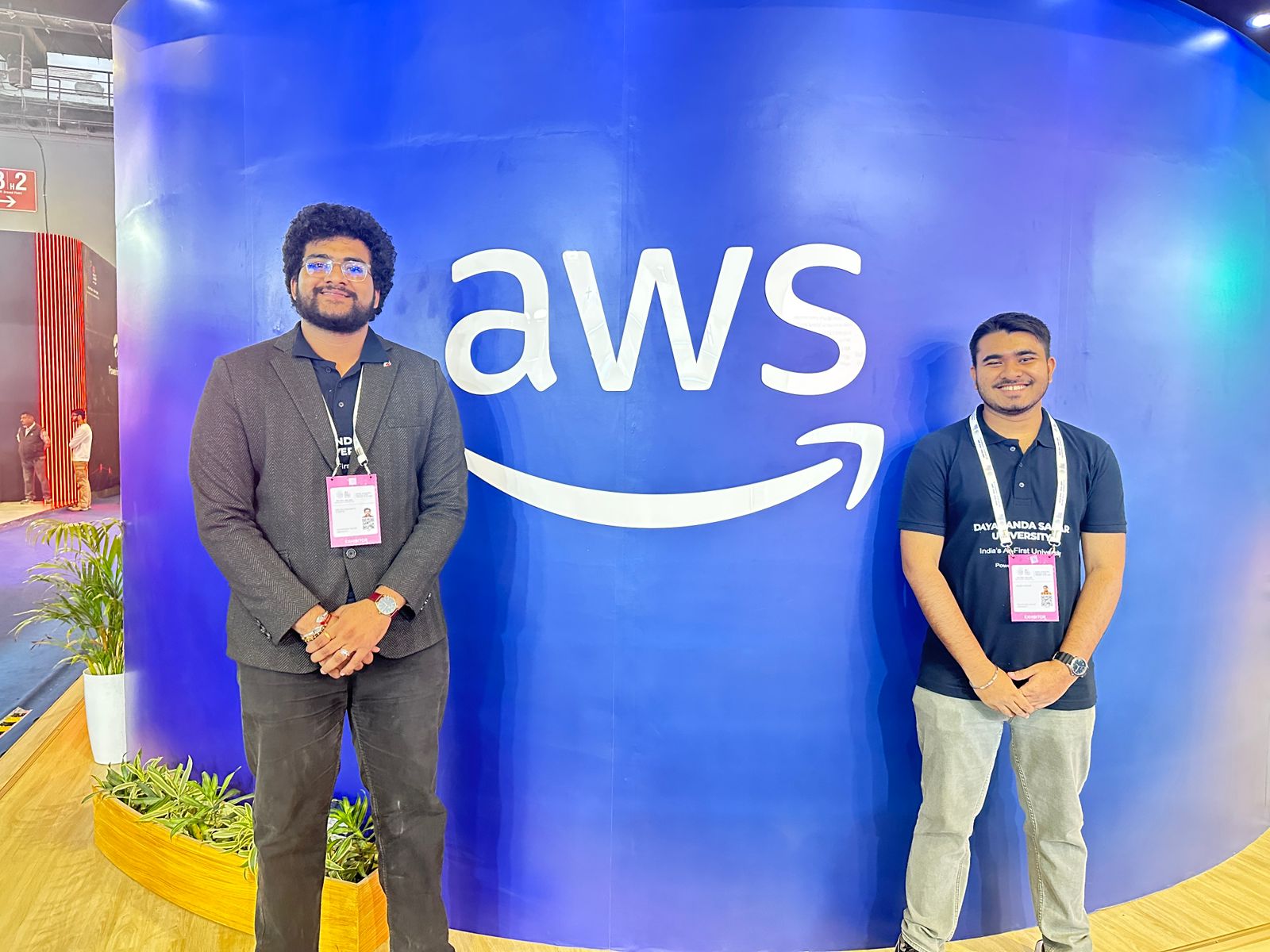
AWS's comprehensive cloud infrastructure and enterprise AI solutions
Key insights from AWS conversations:
- Large-scale training in cloud with custom infrastructure and optimizations
- Serving models through edge deployment with AWS IoT services
- Integrated monitoring and management across cloud and edge infrastructure
- India-specific services for regulated industries (healthcare, finance, government)
This cloud-edge architecture is becoming standard. Research models get trained on cloud infrastructure with enormous compute, then optimized and deployed to edge devices. Our work on model compression and efficient inference fits naturally into this pipeline—research on cloud infrastructure, practical deployment on edge.
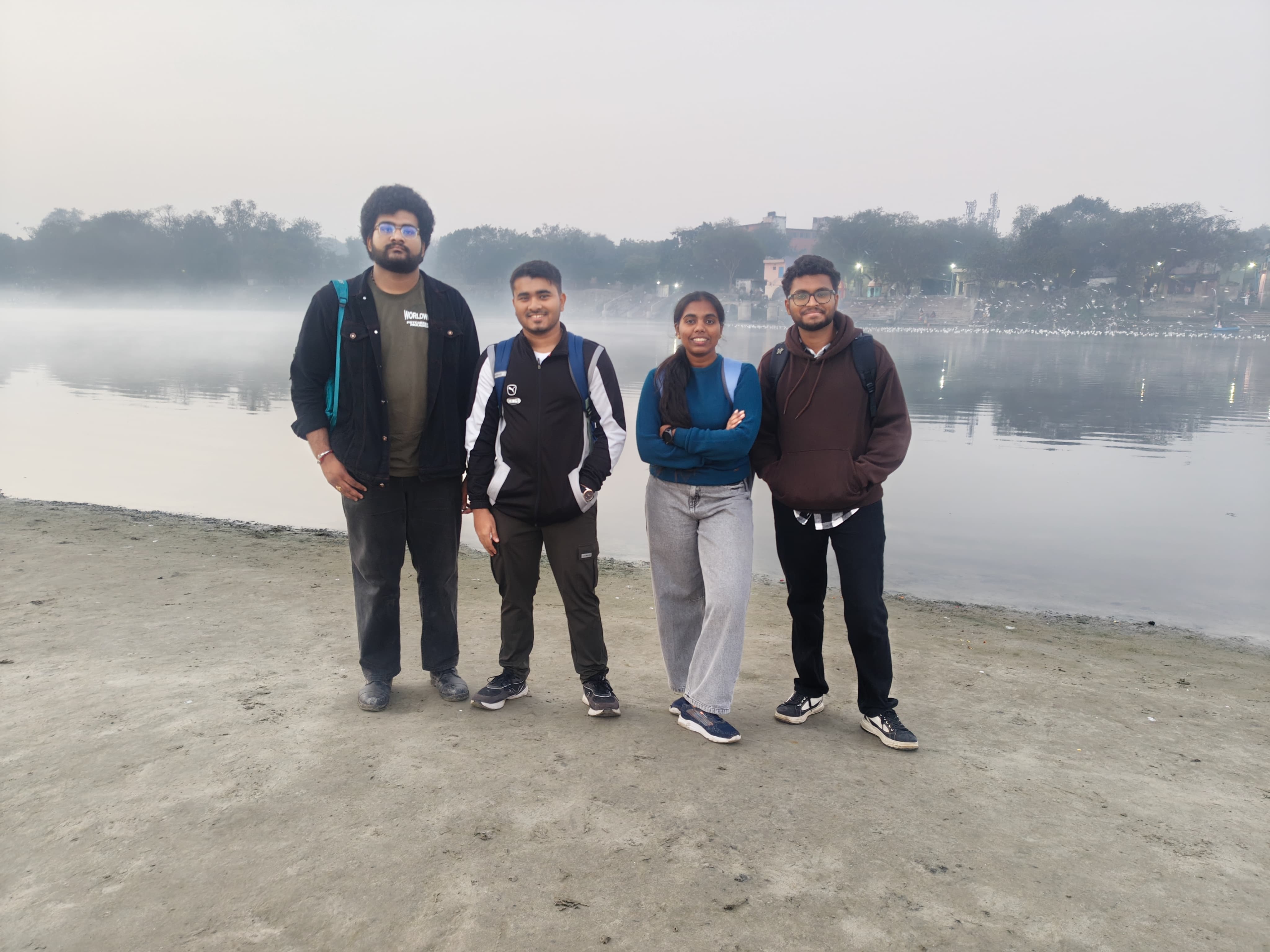
Team arrival in New Delhi—beginning of the India AI Impact Summit 2026 journey
Why This Summit Matters for AI in India
The India AI Impact Summit 2026 represents a moment of inflection for India's AI ecosystem. For the first time, India isn't just consuming AI technology developed elsewhere—it's contributing to the global frontier of AI research. Indian researchers are publishing at NeurIPS and ICML. Indian startups are building products that compete globally. Indian policy makers are shaping responsible AI frameworks that other countries are studying.
What makes this different from previous conferences:
- Institutional Support: Universities like DSU receiving infrastructure support (NVIDIA), government backing for AI initiatives, venture capital flowing into deep tech startups
- Practical Problems: Focus isn't abstract—it's on real problems: healthcare access in rural areas, financial inclusion, agricultural optimization, governance efficiency
- Indigenous Innovation: Rather than implementing Western solutions, Indian researchers are developing context-specific approaches
- Talent Magnet: Drawing back diaspora researchers, attracting global talent to India, building permanent research institutions
- Execution Focus: Moving from "let's prove AI works" to "let's deploy AI at scale"
This confluence of factors—institutional support, practical problems, indigenous innovation—makes this a transformative moment for AI in India. And DSU, with its emerging research capabilities, is positioned at the forefront of this movement.
Gratitude & Acknowledgments
This experience would not have been possible without exceptional vision and support from the DSU leadership. Their commitment to positioning DSU as a global AI research powerhouse enabled this opportunity.
DSU Leadership
- Vice Chancellors & Pro Vice Chancellor: For the strategic vision and institutional backing for frontier AI research
- Dr. Bukinakere S. Satyanarayana: For his guidance on research direction and institutional strategy
- Dr. Prakash Sheelvanthmath: For driving innovation initiatives and supporting student-led research
- Dr. Uday Kumar Reddy, Dean of DSU: For enabling cross-disciplinary AI research and international engagement
- Supriya Mathew, VP of International Affairs: For facilitating industry connections and academic engagement
- Abhishekh Ganesh, Chief Marketing Officer: For ensuring DSU's research receives proper visibility in the ecosystem
- Dr. Pramod Kumar Naik: For mentorship, guidance, and support throughout this journey
Team & Fellow Builders
It was extraordinary to share this experience with fellow builders—Sreedevi Sreedhar, Srikshith Arshanapally, and Krishna Siddharth. Each brought unique expertise and perspectives. We navigated the summit together, supported each other during technical presentations, and represented DSU not just as individuals but as a unified team committed to advancing AI research.
Special recognition to the Autonomous Intelligence & Robotics (AIR) Research Group members, medical AI lab researchers, and robotics team who contributed projects and demos. The stall's success was a testament to collective effort and shared vision.
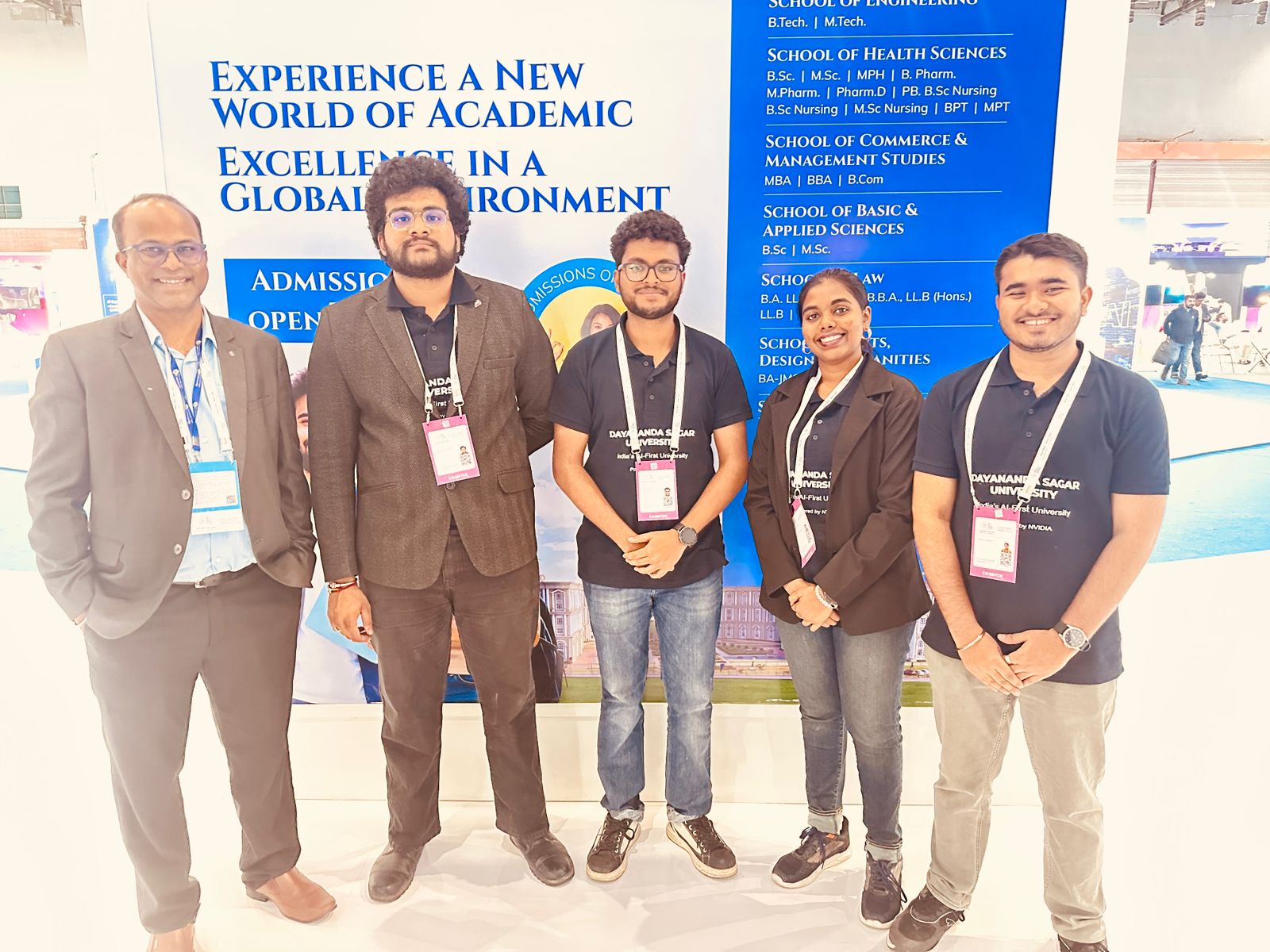
DSU students
The Path Forward - From Consumer to Creator
The India AI Impact Summit 2026 has crystallized a clear vision. We are actively shifting from being passive consumers of AI technology developed elsewhere to active creators and innovators shaping the future of AI. The summit reinforced this mission and accelerated our timeline.
Every conversation, every technical discussion, every moment of feedback has clarified the path ahead—ambitious but grounded in real industry demand and scientific opportunity.